
Every year, thousands of young Nigerians finish school with a certificate in hand and the same question on their minds: now what? Many employers answer with a question of their own: can you actually do the work?
That gap between what people have studied and what workplaces need is the skills gap. It is one of the biggest barriers standing between Nigeria's young people and the jobs, contracts and businesses they are ready to build.
Why certificates alone are not enough
A certificate proves that someone sat through a course. It does not prove they can wire a building safely, install and configure a CCTV system, repair a home appliance or run a social media campaign that brings in customers. Employers and clients hire for results, so they look for people who have already done the work, even if only in training.
Learners feel this too. Theory without practice is hard to remember and even harder to apply. When the first real job arrives, confidence is low because the tools and the problems are unfamiliar.
What learning by doing looks like
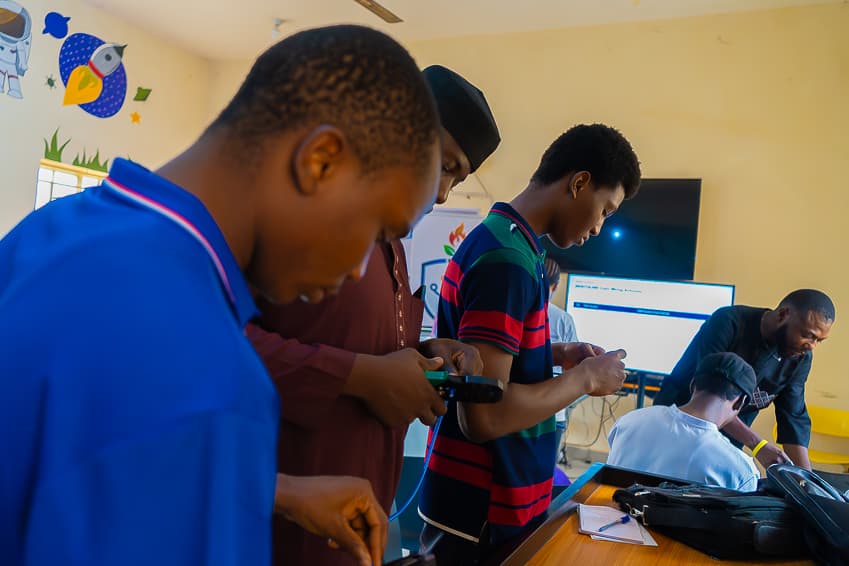
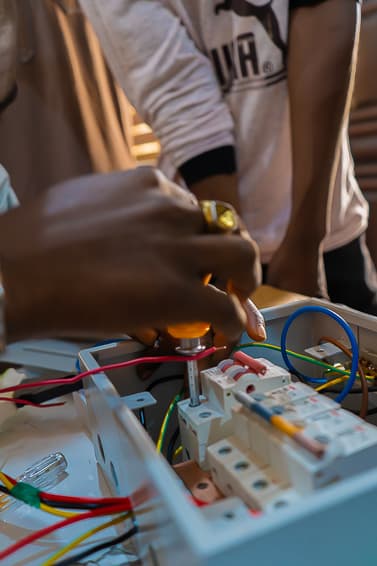
At Meristem VEII, most of the learning happens with the tools in hand. Every programme is built around practical sessions, real equipment and projects that look like the work learners will be paid to do.
- Practice before theory runs out. Learners handle real tools and kits early, so ideas turn into skills while they are still fresh.
- Projects that mirror real jobs. Installations, repairs, builds and campaigns are planned, carried out and reviewed the way a client or employer would review them.
- Mistakes in a safe place. It is far better to get a connection wrong in a workshop, with an instructor beside you, than on a customer's site.
- A portfolio to show. Finished projects become evidence of skill that learners can show to employers and clients.
The goal is simple: when a Meristem graduate walks into their first job or meets their first customer, it should feel familiar, not frightening.
Recognised skills employers trust
Practical skill matters most when it is recognised. Meristem VEII programmes lead to NBTE accredited certificates, so graduates leave with both the ability to do the work and a qualification employers and clients can trust. Since 2015 we have trained more than 5,000 graduates across Nigeria.
Skills for employment and for enterprise
Not everyone wants a job. Many learners want to be their own boss. That is why our programmes combine technical training with enterprise skills: pricing work, finding customers, keeping simple records and growing a business that can one day hire others. Practical skills close the gap for employees. Enterprise skills help graduates create jobs of their own.
Start closing the gap
If you are ready to learn a skill you can use from day one, explore our programmes, read how admissions work, or apply in a few minutes. If cost is a concern, see the scholarships and funding available each intake.